Note: episode 157 was recorded in September of 2022.
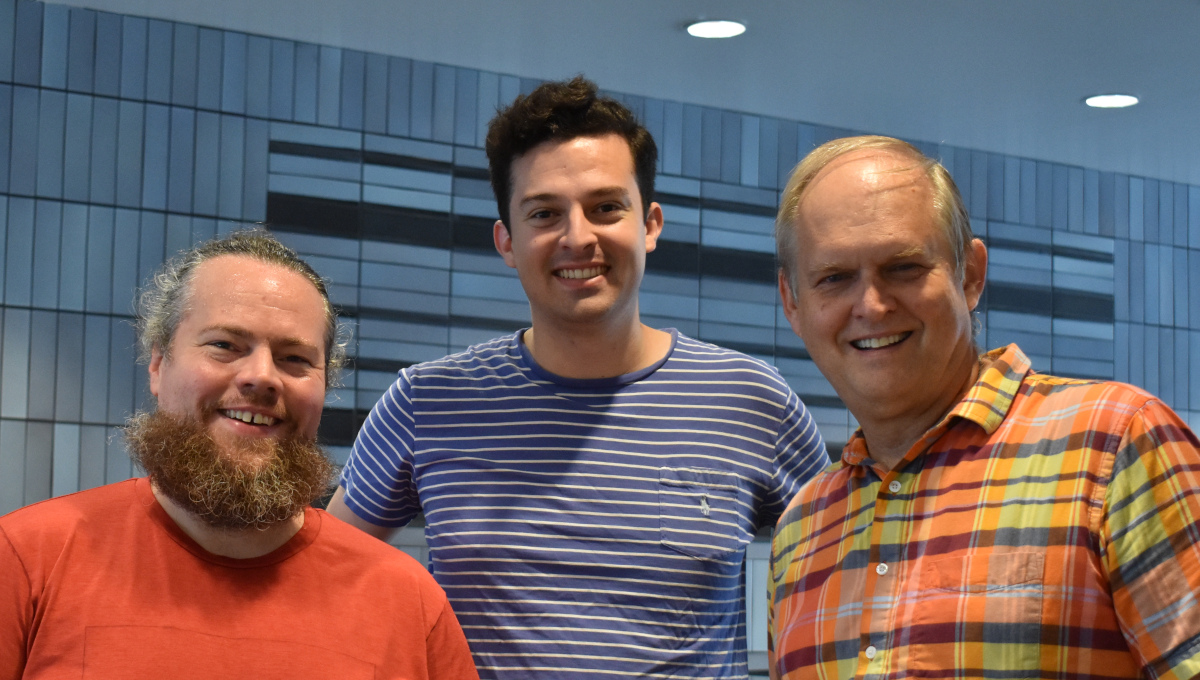
Full transcript here. In this episode, Matt and Joseph sit down with Robin Hanson, Associate Professor of Economics at George Mason University, to discuss prediction markets. Click here to download Episode 157 of Elucidations.

A prediction market is a kind of betting market, wherein people place bets on whether or not some future event is going to happen by investing in market shares associated with that event. If the event happens, the people who predicted it correctly get paid. If not, they lose the money they invested. So far, so good: all that is pretty normal for a betting market. But in the case of a prediction market, there is a further twist. Before the future comes to pass and the people who guessed it correctly get paid, there’s a mathematical formula you can use, based on the price of the most recent bets that have been placed, to determine what the probability of that event happening is. In other words, before the payout, the current prices of all shares in the market give us the ability to subtly aggregate the wisdom of every individual speculator into a combined judgment about what is probably going to happen.
So what, you might think. Well, it turns out that this system for forecasting the future is unusually accurate, particularly when it comes to making the most difficult predictions about the behavior of large, complex systems. And so, for several decades now, our guest has been thinking hard about how can we leverage the information provided by various prediction markets to assist with a wide range of challenging forecasting tasks that might nonetheless be important to do.
Although prediction markets have mostly been set up, thus far, to determine the outcomes of things like elections or sporting events, Robin Hanson thinks they can be also be used for more ambitious purposes. One small-scale example is: the board of a public corporation could use a variation on a prediction market (called a decision market) to make decisions about whether to hire a new CEO. A bolder example would be a new system of government he calls futarchy, in which legislators abandon their role of drafting and passing legislation, and instead turn their attention to coming up with precise, measurable definitions of success. Each individual question about what policies to pass when can then be adjudicated by prediction and decision markets, which require measurable definitions of success to function.
Robin Hanson is always abrim with fresh ideas, and it was a pleasure talking to him. I hope you enjoy our conversation.
Matt Teichman
Further Reading
Robin Hanson has been active on the internet for quite some time, and was in fact one the early architects of the hyperlink technology the internet is now built on. You can read his Substack here:
You can read more about futarchy here:
This is a cool paper, if you’d like to do a dive into the arithmetic formulas that Robin came up with for computing probabilities from prices:
Logarithmic Market Scoring Rules for Modular Combinatorial Information Aggregation, Robin Hanson
Robin’s two books are available here:
The Elephant in the Brain, Kevin Simler and Robin Hanson
The Age of Em, Robin Hanson
And lastly, he co-hosts the wonderful Minds Almost Meeting podcast with Agnes Callard, who you may remember from this show: